In today’s interconnected world, children raised within multicultural families benefit from a richness of experiences that shape not only how they see themselves but also how they engage with others. Multicultural parenting inherently involves exposing children to multiple traditions, languages, and belief systems, forming a foundation for deep cultural awareness. Such an upbringing encourages children to understand that the world is not monolithic; rather, it is a tapestry of diverse perspectives and histories. According to research across cultural studies, this exposure enhances emotional intelligence and fosters understanding of cultural values that differ from one’s own. Children learn not only rituals and customs but also the underlying values that animate different worldviews. This type of cultural education allows them to grow into individuals who respect differences and recognize common humanity across social and national boundaries.
Building Identity and Cultural Awareness at Home
Central to building a strong multicultural identity is intentional parenting. Many parents in intercultural contexts strive to balance cultural maintenance—such as continuing heritage traditions and languages—with openness to new cultural influences. Academics note that families act as sites of intercultural dialogue, where communication strategies and everyday practices weave together multiple cultural threads to form a coherent familial identity. This process does not happen automatically; it requires deliberate engagement with traditions, open conversations about identity and belonging, and a willingness to navigate situations where cultural norms may conflict. Through this dynamic balancing act, children gain confidence that they can belong to more than one cultural sphere without sacrificing parts of themselves.
Language plays a particularly critical role in this formative process. Children in multicultural households often grow up with exposure to more than one language, which research shows benefits both cognitive development and cultural connectedness. Multilingualism stretches beyond mere communication; it embeds cultural nuances and emotional resonance. Children who can converse in multiple languages are more adept at navigating different social contexts and understanding cultural subtleties embedded in linguistic expression. Scholars of multilingual parenting describe how families use language as a vehicle for nurturing cultural identity and emotional bonds, underscoring that language is both a cultural asset and a tool for building resilience against cultural displacement. [1]
Beyond language and traditions, the act of sharing stories—whether they are family histories, folktales, or experiences from parents’ own lives—contributes to children’s sense of self. Storytelling reinforces a sense of belonging and allows children to anchor their personal narratives within broader cultural landscapes. By allowing children to understand diverse cultural sources of influence, parents offer them the internal framework needed to navigate their environments with both roots and wings: deeply grounded yet globally aware.
Fostering Empathy, Respect, and Adaptive Thinking
Children raised in multicultural families often develop heightened levels of empathy and respect for differences, traits that are essential to the concept of global citizenship. When children witness their parents modeling inclusive behaviors—such as celebrating a variety of holidays, embracing different customs, or discussing complex social issues—they internalize patterns of thought that affirm diversity rather than fear it. Studies show that such exposure can reduce prejudice and widen a child’s capacity for compassionate understanding, positioning them to form meaningful relationships across cultural lines.
Empathy nurtured in the home translates into real-world skills that carry forward into school, workplaces, and community interactions. Children who grow up valuing diversity learn to recognize and respect emotional experiences that differ from their own. They become adept at navigating social contexts where multiple perspectives coexist, a skill that is increasingly recognized as important in diverse societies and globalized economies. Within multicultural households, children learn that different ways of thinking and living are not merely acceptable but enriching, expanding cognitive flexibility and resilience.
Respect for diversity also involves teaching children how to discuss and navigate cultural differences with honesty and openness. Parents in multicultural families often face the challenge of addressing complex topics such as ethnicity, religion, and cultural biases. By providing age-appropriate explanations and encouraging critical thinking, parents help their children develop an inclusive mindset that questions stereotypes and champions understanding. Open discussion about diverse cultural experiences supports emotional maturity and ethical reasoning and helps children become active agents of empathy in their own communities. [2]
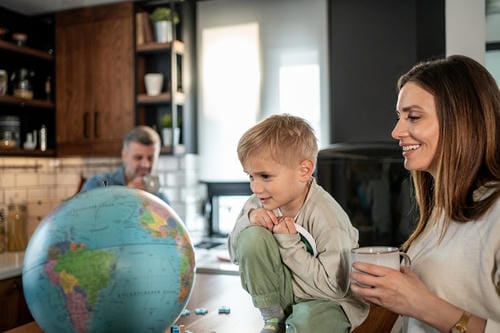
Another critical aspect of multicultural parenting is cultivating adaptive thinking. Children who grow up with diverse cultural inputs learn to switch cognitive frameworks depending on context—a concept sometimes described in psychological literature as cultural frame-switching. This adaptability allows young people to appreciate that solutions and behaviors effective in one cultural context may not hold the same value in another. Such flexibility enhances problem-solving skills and prepares children to engage constructively with uncertainty and ambiguity.
Everyday Practices That Shape Global Mindsets
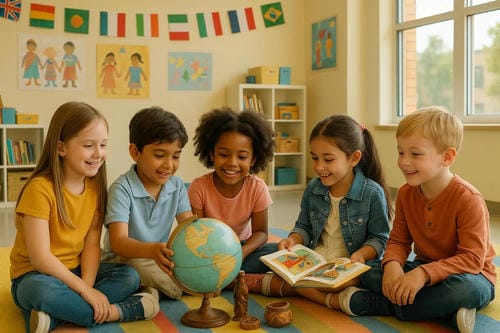
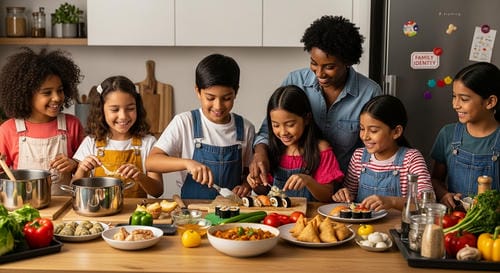
The development of global citizens begins not with grand gestures but with everyday practices families integrate into their routines. Simple yet intentional actions—such as sharing meals from multiple culinary traditions, observing a mix of cultural festivals, or reading books from around the world together—reinforce cultural literacy and curiosity. Activities that expose children to the diversity of human expression help strengthen their capacity to value both differences and shared humanity. [3]
In addition to shared activities at home, engaging with diverse external environments—such as multicultural community events, travel, or participation in cultural education programs—broadens children’s perspectives. These experiential learning opportunities help extend cultural understanding beyond the immediate family, fostering comfort and confidence in settings that reflect the world’s diversity. Such engagement also emphasizes that global citizenship is not abstract but lived through meaningful interactions with people from varied backgrounds.
Parents in multicultural families also play a key role in supporting children’s emotional journeys as they integrate multiple cultural identities. Identity formation in multicultural contexts may involve moments of tension or confusion, especially when children feel pulled between differing cultural expectations. By acknowledging and validating these experiences rather than dismissing them, parents help children understand that holding multiple cultural identities can be a source of strength. Encouraging children to express their thoughts, ask questions, and explore their heritage without pressure to choose one culture over another promotes self-esteem and resilience. [4]
Daily practices such as routine cultural rituals, celebration of traditions from all sides of a child’s heritage, and fostering bilingual or multilingual communication enrich children’s cultural repertoire and reinforce a sense of inclusion. These practices send a powerful message: that the world is a mosaic of meaningful traditions and that children are part of a broader human story where every culture contributes to the beauty of collective experience.
Sources:
[1]: https://www.sciencedirect.com/science/article/abs/pii/S0193397312000652
[2]: https://educationtoday.co/articles/parenting/parenting-in-multicultural-families-embracing-diversity-and-inclusion
[3]: https://learningmole.com/raising-culturally-aware-kids-tips-for-parents
[4]: https://capc-coco.org/wp-content/uploads/2025/03/How-Culture-Shapes-Your-Parenting-And-Why-It-Matters-for-Your-Childs-Well-being.pdf
References:
https://ackyshine.com/relationship/family-and-parenting/raising-multicultural-children-embracing-diversity-at-home
https://nanani.world/the-benefits-of-multicultural-parenting
https://smarteducationtoday.com/managing-multicultural-families-accepting-inclusion-and-diversity
https://danieldashnawcouplestherapy.com/blog/raising-multicultural-kids