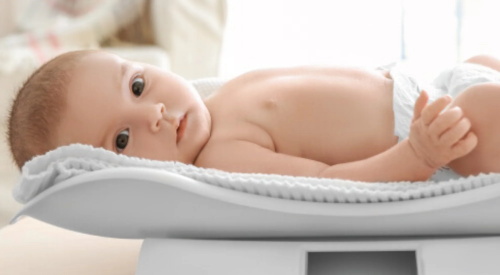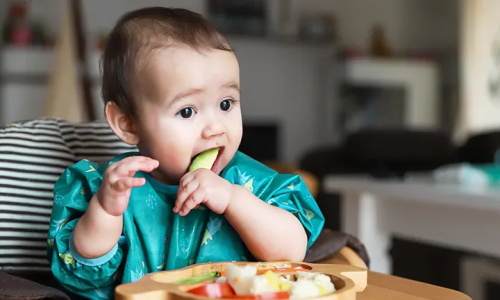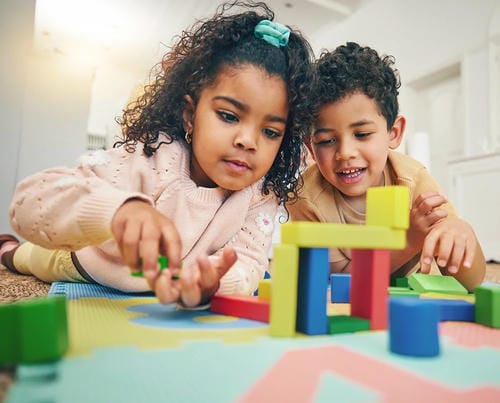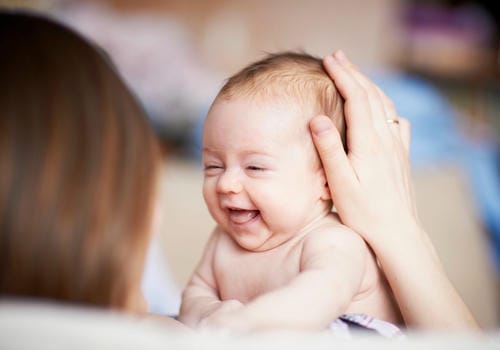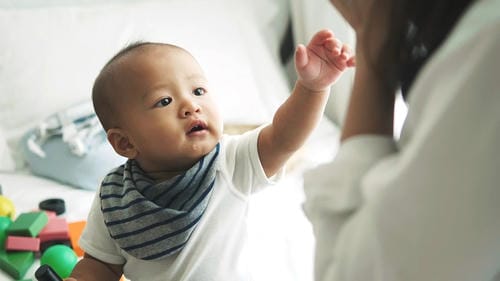
From the very first moments after birth, infants begin communicating with the world around them in ways that may seem subtle but are deeply meaningful. Long before they can articulate words, babies rely on a complex set of behaviors—cries, coos, gestures, eye contact, facial expressions, body movements, and vocal play—to convey needs, emotions, and engagement. These early behaviors are not random; they serve as the foundation of all future communication and social connection. Throughout the first year of life, caregivers learn to interpret these cues and respond appropriately, building the trust and attachment that support a child’s emotional well-being and cognitive development. Research supports the idea that infants are born ready to communicate, showing preferences for the human voice and beginning to orient toward familiar faces and sounds in the earliest weeks of life. Newborns, for example, will turn their eyes and head toward voices and track faces close enough to see, which suggests that the capacity for social connection begins at birth and develops rapidly in the months that follow.
Understanding the “language” of infant behavior can help parents distinguish between different signals and respond in ways that foster healthy development. For example, while crying is often the first behavior parents notice, it shifts over the first few months from a primarily reflexive response to a deliberate signal used to communicate hunger, discomfort, tiredness, or need for comfort. Simultaneously, infants begin to develop social smiles, cooing sounds, and sustained eye contact that signal engagement and interest in interaction, not just need. These behaviors are the earliest manifestations of what developmental scientists refer to as social communication competence, the building blocks for later language, emotional regulation, and interpersonal skills.
Caregiver responsiveness plays a critical role in shaping this early communicative competence. When parents and caregivers notice and respond to an infant’s cues—whether by comforting, making eye contact, vocalizing back, or mirroring gestures—that infant learns that communication has effects and meaning. This two-way exchange, often described as a “back-and-forth” interaction, helps infants learn not only that their behaviors influence others, but also that interaction itself is rewarding and socially meaningful. These interactions are not solely about language or words; they involve facial expressions, shared attention, gestures, and rhythms of vocal play, all of which contribute to the infant’s understanding of social interaction and emotional connection.
Over the course of the first year, these early communicative behaviors become increasingly intentional and complex. Babies move from reflexive crying to expressive cooing and babbling, from random eye movement to sustained gaze and shared attention, and from solitary movements to gestures that indicate desire or emotion. Each behavior is tied to developmental progress; crying becomes less frequent as infants learn other ways to express needs, eye contact supports joint attention and connection, and babbling lays the groundwork for future speech. Together, these behaviors reveal not only what a baby needs in the moment, but who they are becoming as a social, emotional, and cognitive being. [1]
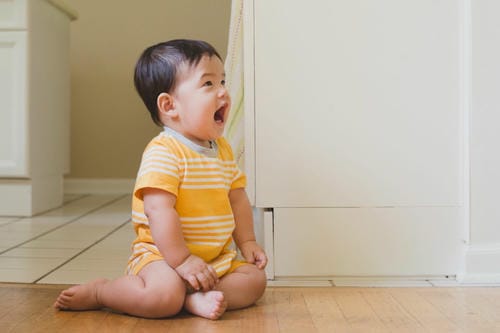
Understanding these behavioral signals allows parents to better meet their infant’s needs, reduce stress on both sides, and support secure attachment—the emotional bond that forms when infants consistently experience their caregivers as responsive and reliable. In the sections that follow, we will explore what specific infant behaviors typically communicate throughout the first year, and how recognizing and responding to these behaviors fosters connection and developmental growth.
The Basics of Infant Communication: From Crying to Engagement
From the moment they are born, infants use behaviors to signal everything from basic biological needs to social engagement. At its core, infant communication consists of cues that tell caregivers what the baby needs and how they feel in the moment. Crying is often the first and most obvious form of communication: newborns cry to indicate hunger, discomfort, tiredness, or pain, and this crying may change in intensity, sound, and pattern depending on what is needed. Caregivers often learn to distinguish these subtle differences over time by noticing context and accompanying cues.
Aside from crying, babies use a combination of facial expressions, body movements, and vocal sounds to interact. Eye gaze and facial expressions are especially meaningful: when an infant looks directly at a caregiver’s face or holds eye contact, they are showing engagement and readiness to connect. Such behaviors signal that the baby is interested in connection and exploration of the social world. Conversely, behaviors such as turning the head away, rubbing the eyes, or crying may indicate overstimulation, tiredness, or a need for a break.
Early vocalizations also carry meaning. Before words emerge, infants produce reflexive sounds, cooing, and later, babbling. These sounds are not random; they represent early attempts at communication and social exchange. Cooing and vowel-like sounds are often invitations to interact and can evolve into more complex vocal play as the baby’s brain and vocal tract mature.
What Specific Infant Behaviors Tend to Communicate?
Infant behaviors change and increase in complexity throughout the first year, each signaling something important about developmental progress and social communication.
Crying Patterns
Crying is a primary tool for communication early in life. Research and pediatric resources emphasize that crying communicates a wide range of needs, including hunger, discomfort, fatigue, and even the need for comforting presence. Some crying patterns (e.g., short and rhythmic) may signal basic needs like hunger, while longer, intense cries can reflect distress or discomfort. As babies age, they typically cry less as they develop other ways to express themselves and as caregivers learn to respond to earlier, subtler cues. [2]
Eye Contact and Gaze
Studies show that infants begin to coordinate eye gaze with facial expressions and vocalizations as early as a few months old, laying the foundation for social engagement and emotional communication. Sustained eye contact demonstrates interest and readiness for interaction, while following a caregiver’s gaze is an early sign that infants are beginning to share attention—a critical skill for later language learning.
Smiles and Facial Expressions
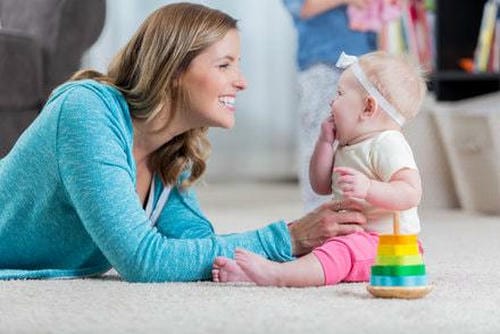
Around 6–8 weeks of age, babies typically begin to offer social smiles that are genuine responses to caregivers’ voices or faces, not just reflexive reactions. These smiles are powerful communicative signals of positive engagement and pleasure in social interaction. Over the first year, infants use a broader range of facial expressions—not just smiles—to indicate interest, frustration, discomfort, excitement, and curiosity. [3]
Body Movements and Gestures
Infants use body language long before speech. Reaching toward a caregiver often communicates a desire to be held or to explore something together. Over time, showing and giving objects emerge as early gestures that indicate intention and interest, typically appearing closer to 9–12 months of age. These gestures help babies to engage caregivers in shared experiences and lay the groundwork for nonverbal communication and, eventually, language.
Vocalizations Beyond Crying
As early as a few months, infants produce coos and gurgles that signal pleasure or readiness to communicate. By mid-year, babbling emerges—characterized by repeated consonant-vowel combinations. Although babbling is not yet meaningful speech, it represents a critical stage in language development and often occurs in social back-and-forth “conversations” with caregivers. Such vocal play prepares infants for later word formation and expressive language.
Signs of Engagement vs. Disengagement
Understanding whether a baby is engaged or overwhelmed by interaction is essential. Engagement cues include relaxed body movements, bright eyes, and reaching out to a caregiver, signaling readiness for play or attention. By contrast, disengagement cues—such as looking away, arching the back, yawning, or fussing—signal that the baby needs a break or is experiencing too much stimulation. Responding appropriately to both types of cues builds trust and helps infants learn about regulation and comfort. [4]
As babies approach the latter half of their first year, more complex behaviors begin to surface. For example, around 6–8 months, many infants show stranger anxiety, indicating growing awareness of familiar and unfamiliar people. By 9–12 months, gestures like pointing start to appear, marking intentional communication about objects of interest even before words. These behaviors reflect increasing cognitive and social sophistication.
Throughout this first year, each behavior—from a subtle gaze to a joyful vocalization—is part of a larger developmental arc. These behaviors communicate not just what your baby needs right now, but also how their social and emotional skills are unfolding over time. By learning to read and respond to these cues, parents and caregivers can foster secure attachment, support language development, and nurture a responsive caregiving environment that helps infants thrive.
Sources:
[1]: https://phys.org/news/2025-07-communication-street-youre-month.html
[2]: https://raisingchildren.net.au/newborns/behaviour/understanding-behaviour/newborn-behaviour
[3]: https://www.allfitwell.com/baby-emotions
[4]: https://www.rch.org.au/cocoon/project/getting-to-know-baby/Cues
References:
https://parenting-ed.org/wp-content/themes/parenting-ed/files/handouts/development-the-first-year.pdf
https://academic.oup.com/chidev/article-abstract/92/6/2224/8254878
https://www.sciencedirect.com/science/article/pii/S0163638315301272